
Archives for clarei

Get inspired this Easter!

Although Easter falls on a slightly different date each year, depending on the lunar calendar, it always occurs mid-spring, amidst William Wordsworth’s crowd of golden daffodils and John Clare’s little lambs with wagging tails. Add this to a bank holiday allowing us time to relax with family and friends and this is surely enough to warm even the most weary of hearts after the long grey winter.

Dig a little further into our nation’s heritage and you’ll discover why Easter has always been associated with hope and new beginnings. From the Middle Ages onwards, the sound of glorious hymns soaring high amongst ancient church rafters, yellow and white flowers mingling their sweet fragrance with the scent of beeswax on sturdy wooden pews and sonorous voices ringing from the pulpit with a clear message of hope and joy, drew faithful congregations, dressed in their Easter best, to churches in every parish across the nation. This brought a fresh sense of hope and a new start for many over the ages.

Easter is still a great time to find new inspiration, what with all the rebirth around us. So, why not get onboard and channel a newly found creative flow into trying out a different craft? It’s a great time of year to jump aboard this wave of enthusiasm and put in place some events and gatherings to encourage others to learn your craft. There are numerous ways we can learn a craft online with the help of YouTube tutorials or Pinterest inspiration, but here at Craft Insurance, we believe there is no substitute for meeting up with other crafters and we have often emphasised the benefits to both individual mental health and the cohesion of a community by gathering together like-minded crafty folk. There are also some great business opportunities in this; everyone wins on more than one level as new skills are learnt, friendships are forged and your skills and business are furthered.

What, therefore, are some ways in which you can both grow your own business and teach others your craft? Firstly, it might be worth connecting with other crafters in your area, if you have not done so already. There may be a local arts quarter where crafters congregate to work and sell their products or an annual arts and crafts week where they join together to promote their crafts. These may lead to opportunities to hold demonstrations or workshops, and you can get on board with their advertising. If you do not have your workshop, you may be able to hire space from a local community craft centre. Or, you might find that there are already a series of workshops running and you can add yours to the line-up.

It might also be worth approaching local groups to see if they would like a demonstration or session teaching some of the basic skills of your craft. A quick look through Facebook or on a town hall noticeboard will give you an idea of what kinds of groups meet regularly. You could also go for a lateral approach; if there is a toddler group, there will also be a group of new mums who might appreciate a night out with a glass of wine and the opportunity to learn a new skill. It is also very likely there will be home-educating families in your community; they are generally a creative bunch and enjoy any opportunity to learn something new (especially if it involves a cup of tea for the parents!) so this too could be an avenue worth exploring.

It is also not too late to book yourself into some craft fairs and markets. Although you may not be able to do a full-blown demonstration here, you can use the opportunity to advertise your workshops, and by displaying your products and chatting with customers, you may well inspire some recruits!

With all these opportunities for growing your business and expanding the reach of your craft, you will need to consider acquiring the correct craft insurance. So, how much does craft business insurance cost? This will depend on several factors and the most straightforward way to ascertain the best package for you, is to get in contact with us; either drop us a message or pick up the phone and Naomi or Sam will be here to answer all your questions, including “how much does craft business insurance cost? If you are demonstrating or teaching, it is strongly advisable to have public liability insurance. This covers you for any claims of harm made by members of the public. You may also use these opportunities to sell some of your products, and in that case, product liability insurance is advisable. Check out our website for further information; we have years of experience answering the question “How much does craft insurance cost?” for a wide variety of crafting needs and businesses. We can provide you with a bespoke package for your unique business, thus saving you money and enabling you to have peace of mind and confidence as you go out and promote your craft.

It’s time to enjoy the new impetus accompanying the hope of new beginnings at Easter-time, by taking some time out to enjoy the beauty of the natural world bursting forth in all its new life. Let the beauty and joy around you seep into your soul! There’s a steady reassurance that comes from the new life in the changing seasons that has stood the test of time and helps us to set our compass for a busy summer ahead. Then, newly refreshed and re-inspired, we can get to organising some gatherings to teach and inspire others in our amazing crafts!

How much does craft insurance cost for handcrafting trend-setters?

Redingote or fontange, drum farthingale or stomacher? I beg your pardon. The question we ask ourselves each morning “What shall I wear today?” has been repeated through millennia, with innumerable answers and combinations. While we no longer have to endure the inconvenience of wide skirts held up by a farthingale or the need for a highly tailored redingote for horse riding, we are still influenced by fashion. What is it then that influences fashion itself? Is it simply the popular vote and good marketing, or are there other factors which hold sway? Looking at the last hundred years of fashion, are there some timeless items that have endured the test of time? Let’s dive into the fascinating world of fashion!

From woollen tunics worn by Saxon women to the short nylon skirts of the 1960s, fashion has travelled seamlessly through the ages and provided us with a rich insight into the lives and times of the people of our nation. Amongst the many factors which have influenced fashion are the textiles available. Our consistently high levels of rainfall have given rise to the green and pleasant lands of Great Britain, ideal for sheep farming. Thus wool has been a staple textile for our clothing for centuries, arguably reaching its peak in the Middle Ages when the wealth of numerous towns was built upon the wool trade. Linen was a staple textile in France; the Bayeux tapestry was created from it. Despite our cooler climate, flax was grown here too and both wool and flax were woven on home looms. The increased availability of cotton during the eighteenth century, followed by the Industrial Revolution in the nineteenth century, resulted in huge changes both in fashion and in the widespread availability of new clothes. No longer was each item painstakingly hand stitched, but factories manufactured the cloth and sewing machines produced the garments.

Maybe the next seismic shift in textile production came post the Second World War with the explosion of man-made textiles. We have, in some ways, come full circle now with our growing awareness of the impact on our environment of never-ending consumerism and the high energy costs of man-made textiles. Thus there is a growing demand for clothing made from natural fibres which are both durable and have a low environmental cost.

Fashion trends are also influenced by national and global events, and we can trace this throughout the twentieth century. Amidst the horror of the First World War, the “war to end all wars” women took on many of the tasks which had until then mainly been carried out by men. With the tragic loss of life of so many young men, women continued to work in these roles as both individual families and the nation endeavoured to recover. Skirts were shortened, a utilitarian look became popular and trousers were worn. In the 1920s, as the economy began to stabilise and women had won the right to vote, skirts became shorter, corsets were discarded and comfort became the goal in design.

Through the Second World War and yet another generation of young men lost; women took on many uniformed jobs and worked as land girls with the iconic khaki trousers and bright red lipstick. Siren suits became popular, the forerunner of the jumpsuit. Clothing rations continued for years after the war, and women learned to “make do and mend”. Skirts were A line to used minimal fabric and gloves, hats and strings of pearls became must-have accessories.

With the arrival of the fifties and sixties, man-made fabrics such as polyester and nylon had a huge influence on fashion, with the advent of feminine wide swirling skirts in the fifties and the mini skirt making its debut in the sixties. The hippie style influenced the 1970s with crocheted tops and eye-catching jewellery. The 1980s through to the 1990s saw experiments with bold colour and man-made fabrics, although denim was also popular.

As crafters, what can we draw from this brief look at fashion through the ages? Are there any timeless classics we can recreate with a twenty-first-century twist? Well-made and well-cut garments will endure through decades, as will classic knitted jumpers. A string of freshwater pearls alongside pearl earrings can be worn on just about any occasion, and beautifully crafted hats, gloves and scarves are needed every winter.

There are plenty of opportunities to sell timeless items of hand-crafted clothing, so if you are a stitcher, yarn whizz or jewellery designer, why not collate your stock? With the warmer weather finally approaching you will be able to choose from a wide variety of fairs and markets, as well as selling online. Once you have done this, one question you will need answered before selling is, “How much does craft insurance cost?”. This is a good question and one for which we are ideally placed to answer. It will depend on many factors, so the best thing to do is to drop us a line or pick up the phone. With knowledge of your unique business needs, we will be able to give you a quote and answer “How much does craft insurance cost?” both clearly and concisely. As a family-run business with several decades of experience in insuring crafters, we are committed to providing a personalised and prompt service. No bots here…you will get to communicate with either Naomi or Sam, thus making the whole process of purchasing the correct insurance straightforward and hopefully stress-free. We look forward to hearing a little about your amazing business and allaying any fears you might have about how much craft insurance costs.

Tomorrow morning, when you ask yourself what you will wear, spare a thought for those women who struggled into tight corsets or uncomfortable ruffs each day! We have a wonderful freedom to develop our individual styles, wearing what feels comfortable and best reflects our unique personality. So step out with confidence and enjoy being you!

Brighten up your world…

Homely rituals and wholesome habits are tools we all have at our disposal which help sustain and ground us through challenging times. They are part of a set of ancient rhythms which have been practised for centuries but are in danger of being lost in our fast-paced world. Happily, positive habits are something that can always be developed again as they are something which we carry out so often that we do not need to think about it; tying shoelaces, brushing our teeth, feeding the dog. A ritual is any set of actions performed regularly. Historically, rituals were associated with religious ceremonies and linked with our physical, emotional and spiritual well-being. As candles were often associated with religious ceremonies it may be unsurprising that many of our homespun rituals involve the warm glow of candlelight. Examples of this could be sitting quietly with a steaming mug of tea and a flickering candle at the start of the day, or taking a candlelit soak in the bath at the end of the week.

Candles have been around for well over two thousand years, with the mention of them as far back as in Old Testament Biblical times, in Ancient Egypt and China. The method of creating dipped candles was probably first discovered by the Romans, who would have dipped the wick into liquid tallow (animal fat). This was widely used as it was easily available and cheap. Candles continued to be made with tallow throughout Europe until the 1500’s when beeswax was introduced. This had a much more pleasing fragrance and burnt with less smoke, but as beeswax candles were more expensive they tended to be used only by the upper classes and the Church during this period.

Making candles by dipping the wick into the liquid flammable material is time-consuming, and another landmark in candle-making history came in the 1400s when a French inventor introduced the concept of pouring the fluid into moulds, thus producing the first tapered candles. Wicking has also changed over time and across geographical locations. In Ancient Egypt it is thought that reeds were used, and in the Roman times that rolled papyrus was the fibre of choice. Across Europe, loosely spun cotton was a preferred fibre.

Candles were a necessity for both light and heat during the Middle Ages and candle makers, or chandlers, had their craft guild. They would travel from home to home making candles from household scraps and pieces of fat while others sold candles from their shops. Various advances, including paraffin lamps, made the population slightly less reliant on candles and of course, with the introduction of electric lighting in the twentieth century, candles were no longer needed as a source of light. However, they have far from disappeared and a whole new purpose for them has developed over the last few decades; we now enjoy their gentle glow during mealtimes, the calming ambience they provide and their festivity during celebrations, to name but a few.

Here at Craft Insurance, we are proud of the talented and innovative candle-making businesses that are part of the Craft Insurance family. Many of these began as kitchen table crafts, then moved on, dipping their toes in at local craft fairs and markets, to become fully fledged homespun businesses, employing staff and selling online as well as at markets.

If you are at this initial stage of your candle-making business and are considering leaping to either sell online or face-to-face, you will need to consider insurance for product liability. Insurance for product liability is not a legal requirement, but if you are out and about selling your homemade candles, event organisers may request that you have it in place. It covers you and your business against any claims made by a member of the public that one of your products has caused harm to themselves or their property. You will ensure your candles are of the highest quality but insurance for product liability is all about catching you if the completely unforeseeable occurs. We are a family business and have been insuring your amazing craft businesses for several decades. Pick up the phone or drop us a line and either Naomi or Sam will be here to answer your queries and ensure you have the best insurance package for your unique needs. We offer a personal service with no need to communicate with chatbots or wait in a long queue. We are very proud of all our customers achieve and look forward to hearing about your business.

Back to habits and rituals. Most of us thrive off a level of routine; some like more and some less, but it is helpful to have fixed points of reference within our days and weeks. While we may be unable to do much to restore order to our increasingly chaotic world, we can root ourselves and our families in rhythms which will help stabilise us as the whirlwinds run their course. Many of these will be enhanced by a scented, flickering candle. What about starting your day with a warm drink in hand, accompanied by a mellow candle? Some people use this time to read poetry, some motivational maxims or a faith book. Candles add civility to our evening meals, and even if is just beans on toast, the mere habit of lighting a candle makes a shared meal a little less commonplace. At the end of a long day, a massage candle is also a wonderful way to prepare for sleep and there are so many more brands of massage candles on the market to choose from these days! There’s never been a better time to explore the marvellous range of handmade candles available and create some unique, comforting rituals and rhythms using these pots of molten joy.

Getting Ready For The End Of The Tax Year.

Hints and tips to help you get everything ship shape for the tax man

Are you a UK-based crafter? Have you been dreading the tax season? Fear not; with a little bit of planning and some smart tips, you’ll be able to breeze through the tax season with ease.

First things first, let’s talk about tax obligations. As a crafter operating in the UK, you’re likely classified as self-employed. This means that you must file a self-assessment tax return annually by the 31st of January, covering the previous tax year. The tax year runs from the 6th of April to the 5th of April of the following year. Your tax return should account for all your income sources, including sales, commissions, and other earnings related to your craft business.

Now, let’s talk about the basics of tax preparation. Good record-keeping is key to making the tax season as smooth as possible. You should ensure that you have meticulously recorded all your transactions over the tax year, including income, expenses, and investments. This includes materials purchased, venue hire for markets or fairs, equipment costs, and other business-related expenses.

Digital accounting software can be a game-changer for helping you keep track of your income and expenditure, allowing you to keep track of your finances efficiently. There are lots of different accounting software options available. At the moment, it is still possible for you to keep all of your accounts on something simple, such as an Excel spreadsheet, but at some point in the not-too-distant future, Making Tax Digital will come into force. This will require everyone filing a tax return to use one of the many digital accounting software options that have been approved by HMRC. Remember, well-organised records can simplify filing your tax return and help you identify allowable expenses that reduce your taxable income.

Speaking of expenses, it’s essential to understand what you can claim as allowable expenses. These are costs directly related to running your craft business. Common examples include raw materials, studio rent, utility bills for your workspace, marketing expenses, and costs of attending trade shows. You can also claim for the Crafters’ Insurance that you have in place to protect your business.

Claiming these expenses can significantly lower your taxable profit, reducing your overall tax bill. However, ensure that the costs are justifiable and well-documented to avoid any issues with HM Revenue and Customs (HMRC). It is also possible for you to claim a working-from-home allowance. This can either be a flat rate (which you can find on the HMRC website), or it can be calculated on a per-room usage basis. If you choose the latter, it can be a good idea to speak with an accountant to ensure you are calculating this correctly.

Where possible, you should ensure that you keep all receipts and bills that relate to your business. If you are using accounting software, you can take photographs of your receipts and add them directly to each transaction as proof of your purchase. This gives you a level of protection should you be selected for a tax investigation.

Another way to protect your craft business is to consider Crafters’ Insurance. This can provide a safety net that protects your business from potential risks, such as property damage, theft, or liability claims. While insurance premiums represent an additional cost, they are also deductible as a business expense, potentially lowering your taxable profit. More importantly, comprehensive insurance can prevent unexpected financial setbacks that could affect your business operations and financial stability during the tax year.

One of the most stressful aspects of tax season is ensuring you have the funds available to pay your tax bill. To avoid surprises, it’s wise to set aside a relevant amount of your income throughout the year in preparation for this. Many crafters find that transferring a percentage of their earnings into a separate savings account can help manage this effectively. You can do this on a monthly or quarterly basis depending on how complex your accounting needs are. Consider making Payments on Account if your tax bill is consistently high. This involves making two payments each year towards your next tax bill, helping to spread the cost. These payments are usually taken in January and June.

If you are looking for ways in which you can be as tax-efficient as possible, you may want to speak with an accountant or a financial advisor. They will be able to talk you through how you can be more efficient with your tax payments. This may include making payments into a pension scheme before the end of the final year. Ideally, you would set this up as a regular monthly payment. An accountant will also be able to help you ensure that you are staying compliant within the framework of business tax and self-employed tax requirements.

By understanding your tax obligations, keeping detailed records, maximising your allowable expenses, utilising relevant tax allowances, considering Crafters’ Insurance, planning for your tax bill, and seeking professional advice, you can confidently approach tax season. Not only will this ensure compliance with HMRC, but it can also lead to significant savings, allowing you to reinvest in your passion and grow your craft business. By starting each tax year off in the right way you can help to prevent the last-minute January rush to gather together all of your information and to submit your self-assessment. Once the new tax year starts, you will be able to submit your tax return for the previous year. So why not start the 2024 tax year off by submitting your 2023 return as soon as possible and ensure you are recording all relevant purchases and sales ready for the following year?

If you have all of your accounts and tax records in place, it will free you up to be able to carry on with the vital part of your business, making excellent crafts to sell.

Basket weaving

Basket weaving must be one of our oldest and most globally distributed crafts; in its most basic form, the only tool required is a knife to harvest and trim the fibres and the only material needed are the fibres which grow locally to the area. We know of baskets being in use as far back as in ancient Egypt; in Biblical times, the baby Moses was placed in a ‘Moses’ basket (as it became known) and hidden amongst the rushes to escape Pharaoh’s order to kill all the baby boys in the land. Thankfully he was then found and adopted by the Pharaoh’s daughter…but that is another story!

Articles for trade were placed in baskets distinct to their geographical location and as traders carried their wares across the continents, the art of basket weaving was also transported from one people group to another. New and different patterns were admired and copied and thus designs merged and expanded. While there is vast variation in styles, techniques and the weaving process, the beauty of basket making is that out of fibres taken from the local landscape, something practical, attractive and useful is made. Baskets are inherently regional and are intertwined with the patch of land from which their fibres are harvested. As such, they not only have ultimate sustainability credentials but also are a celebration of their particular locality. A foraging trip here in the UK could produce willow, rushes and grasses, along with woods such as oak, ash, chestnut and hazel for stronger baskets. Basket making has been a traditional rural craft for centuries, and we have a delightful connection to the past when we use handmade shopping baskets, laundry baskets, baby baskets and gardening trugs.

Macrame

Macrame (the creation of a textile product using knotting techniques) is not quite such an ancient craft but still dates back at least to the thirteenth century when it is believed to have emerged from Arab weavers, who knotted the end threads of their hand-loomed fabrics together to form decorative fringes around their creations. It became popular in Victorian England, where it adorned many household items. It then enjoyed a resurgence in the 1970s in which it is almost synonymous with the decor and fashion of the era. It is now, once again, enjoying a resurgence in popularity among crafters and buyers.

Macra weave

Macra weave is a fusion of macrame and weaving, fashioning stunning wall hangings with a bohemian vibe. As the latest trend in fibre art, it is a fun and growing wave on which to be surfing.

As crafters, we know there is something immensely satisfying and stress-busting about working with our hands. Maybe it is the rhythmic nature of the work, the sensory input we receive from the materials we use or the opportunity for our innate creativity to find expression; probably a mix of all of these. In our fast-paced, often screen-focused world there is increasing recognition of the value of practising a creative skill, whether that be arts, craft or music-based. Alongside this, there is a desire to learn these new skills, which opens up numerous opportunities for artisan crafters. Fibre art is an ideal craft to teach and pass on, as it is low in cost, the materials are readily available and it is just about mess-free! As an expert in one of these crafts, you will already be producing and selling irresistibly delightful products that are particularly eye-catching at a fair or market. Their attractive appearance not only generates sales but might also lead to opportunities to hold workshops and courses in your locality.

Now is a good time of year to book yourself into some craft fairs. There may also be local Farmers’ Markets or other community events coming up over the late spring and summer at which you could demonstrate as well as sell. Organisers are often keen to have something a bit different; a demonstration of weaving, macrame or macra weave is fascinating to watch and can be done in just about any space provided. You will need to look into market trader public liability insurance. If you are just beginning to venture into the public arena with your craft, phrases such as this can sound a bit overwhelming. However, market trader public liability insurance is, in a nutshell, insurance that covers you for any claims made against you or your staff/volunteers by a member of the public for damage or injury while at a public event. You will put all common sense procedures in place to ensure accidents do not happen, but the very purpose of insurance is to protect you and your business from those completely unforeseeable incidents. Market trader public liability insurance is not a legal requirement, but it is often requested by fair and event organisers. It also offers you peace of mind, thus giving you the freedom to concentrate on the important tasks of creating stunning products and innovative ways in which to market them. This is why we often refer to it as “sleep easy” insurance. As a family firm who have been in this business for decades, we can ensure you get the right package for your unique needs; pick up the phone or drop us an email and either Naomi or Sam will get back to you.

So, as the weather warms and the skies brighten, book yourself a space at a market or craft fair, check your market trader public liability insurance is in place, build up your unique, eye-catching and sustainably sound range of products and take the wonderful world of basket making, macrame and macra weave out to your awaiting public!

Getting ready for spring!

Looking out of the window you might just start to see a hint of the days lengthening, our pale sun just beginning to radiate a bit more warmth. However, we aren’t quite in sight of spring yet as biting, cold winds have yet to morph into more gentle, playful breezes. Looking around, there are a few welcome indications that spring is on its way; cheerful yellow daffodils, frothy pink and white blossom, gently swaying hazel catkins and perhaps even an early magnolia, in all its blousy glory. Our ears pick up the coming change in the season too, with a symphony of birdsong as the time of courting gets underway. After long months of cold, wet and windy weather we may well feel like joining in their jubilation, lifting our faces towards the sun and revelling in the sense of new beginnings all around us. The arrival of Spring does indeed bring fresh inspiration to us all, and for artists and crafters it’s a call to don coat and boots, maybe fill a flask with some fragrant tea, step outdoors and immerse ourselves in the freshly radiant beauty of the natural world.

Classic spring images have adorned our artwork and ceramics as well as our literature for centuries; time honoured mad March hares, hosts of golden daffodils and garden birds sitting snugly on their nests. At a time when we are very aware of preserving and encouraging our wildlife, there are plenty of opportunities to create products which will enable us to do just this. One such is National Bird Box Week which runs between 14-21 February. It aims to increase awareness of the possible decline in birds due to a lack of natural nooks and crannies in which they can safely build their nests, and to encourage us to place bird boxes in our gardens to counteract this. We have a few homegrown, or rather back garden-grown businesses where skilled carpenters and joiners construct stunning, practical and sustainably built nesting boxes. This is an ideal time of year to promote sales whether online or at craft fairs as the need for providing nesting spots for our feathered population will be on people’s minds. If you have the skills to make and sell birdboxes, we’ll take a look at fairs and markets later on and ask the question “What is public liability insurance for craft fairs?” and “Do I need it?” Nesting boxes can sell at any time of year, and make excellent wedding or birthday gifts, with some companies offering a bespoke design service.

Another gift idea to attract wildlife into our gardens would be wooden planters; sold with a butterfly and bee-friendly wildflower seed mix, these could be a winner throughout spring. If you have or are considering a business in wooden products, be sure to clearly promote your sustainability credentials. You may use local timber, pine from sustainable sources or reclaimed wood. Ensure too, that you explain how your business supports your community; maybe employing local staff, using local wood or involvement in any community projects.

Bug hotels are also a popular way to support wildlife in our gardens. These can range from large, elaborate bug mansions to small, cosy hideaways. They provide shelter, protection and space to raise young for a wide variety of insects and other minibeasts. They have a special appeal to children and would make good gifts offering both purpose and longevity.

So, as the warm breezes of spring begin to gently beckon us onward into the year, what can you put in place to see your business grow, blossom and bear fruit? We have many useful posts containing tips for online promotion and marketing, but here, as we consider the world gently stretching and starting to take some tentative steps outside of the warmth and cosiness of our homes and into the bustle and vitality of the marketplace, we will take a fresh look at craft fairs.

Craft fairs spring into life again at this time of year, after a usually dormant January. Take a look at fairs planned in your area and book yourself a table. There will most likely be a proliferation of opportunities as we approach Easter, and your wildlife-attracting products may well provide a welcome alternative for parents and grandparents looking to cut down on their offspring’s chocolate consumption. You could also look towards regional agricultural and gardening shows, usually held over the late spring and into the summer. These will usually require a much higher financial investment in terms of stall space, but would also have greater footfall, covering a larger geographical area.

Farmers’ markets continue throughout the year, and they often offer stalls to local businesses selling handcrafted products. These too pick up in numbers once the weather warms up, and are a good way to get known locally, to make connections and to sell your products. It could be well worth considering a couple of stalls leading up to Easter; the price of a stall is usually reasonable and there is good camaraderie between stallholders and friendly chats with the public.

Having booked your spot, you will need to consider public liability insurance for craft fairs. Although it is not a legal requirement, many fair organisers will request that you have it in place. It basically covers you for any claims that might be made against you by a member of the public for damages or injury which they claim to have been sustained by either you or one of your employees/volunteers. We will cover you, whether or not it is your fault. You will obviously do all you can to avoid this happening, but public liability insurance for craft fairs covers you for those completely unforeseen and thus non-preventable accidents. Having it in place will mean you don’t need to worry about the consequences to your business of a claim, and instead you can pour all your energy and creativity into making and selling your unique products which will bring beauty into your customers’ homes and gardens.

So, as the natural world around us is gradually bursting into life, take time to get out amidst the colours, sounds and fragrances and be inspired!

How to Make Everyone Feel Wanted Around Valen-time

Valentine’s Day … commemoration of a Catholic saint, a day for young sweethearts or a commercial opportunity for mass-produced and plastic tack? Unless you fall into the sweetheart category, or have a genuine conviction of the importance of honouring the lives of those who have lived well in bygone times, Valentine’s Day could either be an unwanted reminder of all that is not how we would like it to be in our lives or a pressure to spend money we do not have on overpriced flowers or gifts. This might sound rather like a Valentine Scrooge, but let us assure you that is not our intention! Rather, here at Craft Insurance, we’d like to suggest another option; why not celebrate Valentine’s Day in a way that includes everyone, that ensures we can all be reminded we are loved and valued, and can be a showcase of local crafts at the same time? What could be better to brighten up a cold February day?

So, to give us some ideas of how our crafts could be tailored for such a day, let’s first take a look at the history behind Valentine’s Day, who St Valentine was and how his commemorative day has turned into a mass marketing event and a mountain of red and pink plastic gifts.

The life of St Valentine is somewhat shrouded by the mists of time. The man we remember could even be a combination of two men, both early Christian martyrs. However, what does seem clear is that he was a priest or bishop and possibly also a physician, living in Italy in the third century AD. He was a man of courage who stood strong in his Christian faith at a time when there was much persecution of the church. He was also a man of integrity who endeavoured to do the right thing for his fellow citizens even if it meant possible penalties by the authorities. Legend has it that he defied the Emperor’s orders and secretly married young couples to spare some husbands from war. A story goes that at the end of his life, while he was waiting in prison to be executed for his faith, he fell in love with his jailer’s daughter, for whom he had prayed and was subsequently healed from blindness. Just before his death, he sent her a letter, signed “Your Valentine.” The feast of St Valentine was established on February 14 by papal decree, in 496. It might, however, not have been until a poem of Chaucer’s written around 1375 that St Valentine was linked with romantic love. St Valentine is also the patron saint of beekeepers; (always an opportunity for some honey and wax-related craft products).

Before Robert Burns’ Red Rose poem, a yellow crocus was the flower traditionally associated with St Valentine. The story behind this is beautiful. Legend has it that when Valentine wrote his final note to the jailer’s daughter, he enclosed a yellow crocus. When she opened the letter it was then that her blindness was healed and the crocus was the first thing she saw. While this could well be more legend than factual reality (how did he get hold of a crocus while in a grim Roman prison) an endearing tradition sprung up from it; churches prepared for the feast day by writing letters to prisoners.

We have gathered together several threads which all weave a story of St Valentine very different to that which is usually portrayed across our nation now. There seems to be a good array of information from which we could reclaim this saint’s day. So, what about celebrating February 14 by showcasing craft with a particular emphasis on buying a gift for someone who you value or someone who serves their community as St Valentine did? It’s a great opportunity to promote soap and other bath products; much-appreciated gifts for mums, aunts, female friends as well as wives and girlfriends. As it’s still cold, woollen hats and gloves would make useful presents and small ceramic products always go down well. For the men in our lives, a choice of metalwork or wood-turned products could be well received.

As St Valentine is also the patron saint of beekeepers, it is an opportunity to include honey, wax candles and any other wax or propolis-based products. As the yellow crocus is the original flower for St Valentine, some rays of sunshine yellow could then join the palette of pink and red.

Valentine’s Day can highlight loneliness, so what about taking your crafts to a community event where tea, coffee and cakes are served? What a great opportunity to promote the idea of buying a beautiful handmade gift for anyone you love, whether romantic or not. Most people are ready for a post-Christmas lift by now!

If you are heading out to take your business to a local coffee morning or larger event it’s also a very good idea to purchase public liability insurance for craft stalls. If this is your first time taking your craft business to a public event, you will probably need some advice on the best type of public liability insurance for craft stalls. Most stallholders who do this kind of thing regularly will have it. Drop us a line or pick up the phone and either Naomi or Sam will be able to help. In a nutshell, public liability insurance for craft stalls covers you for any claims towards damage of person or property which are made against you or your business, regardless of whether or not the incident was your fault. It’s a sleep-easy insurance and as such is well worth having.

So, as we approach Valentine’s this year, we hope you can all give and receive some unique hand-crafted gifts as a token of the value and love you have for family, friends and community.

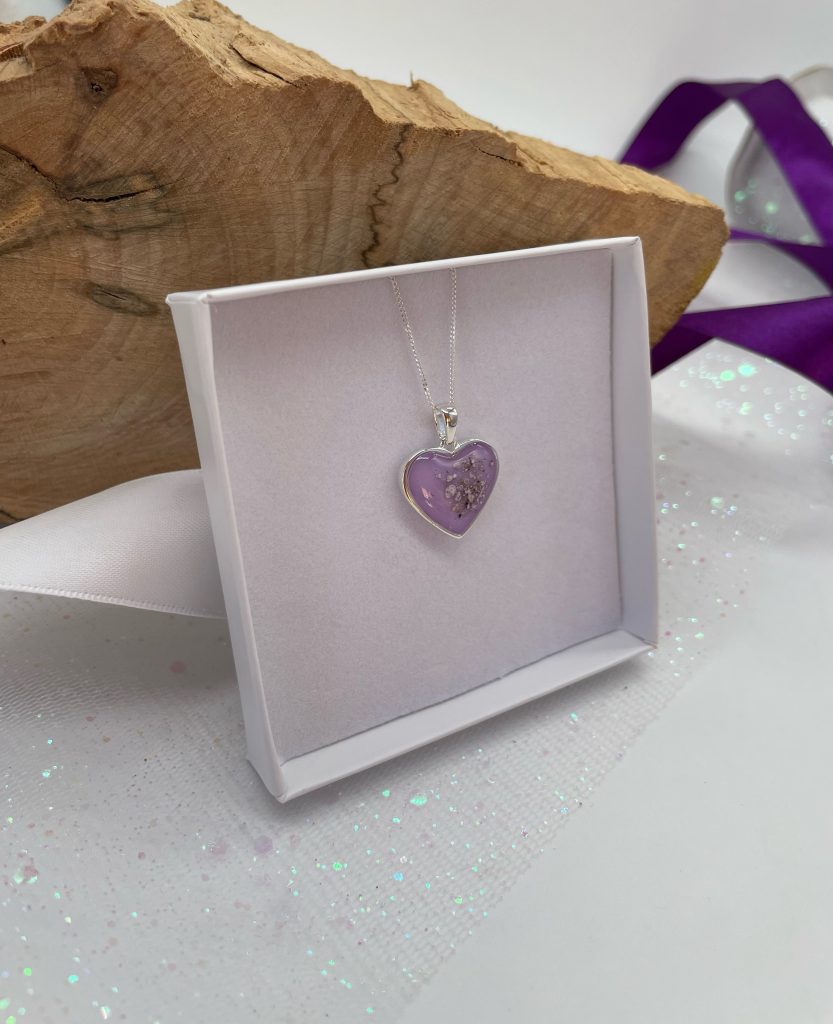
We’d like to feature the work of one of our clients here, Victoria, who is the owner of Sparkle 8 Studio, in the beautiful county of Shropshire. Victoria makes beautiful ashes jewellery alongside other gifts. Please do have a look at her work…

…and a Happy Valentine’s Day to everyone.

Calligraphers Are Writing Something Worth Reading

When it comes to birthday cards, or indeed cards for any occasion, what could be more heartening than to receive a handmade card with a personal message exquisitely penned in calligraphy? This surely beats a mass-produced alternative any day. Calligraphy combines two or even three art forms, depending on our definitions and how it is generated. It blends fine art, linguistic art and craft. As such, it has huge potential to communicate a message which touches the reader on levels of both visual perception and verbal comprehension. At a time when words are all too often demoralising, accusative or just downright scary, what a wonderful gift to be able to present someone with an inspirational or encouraging text in the form of a card or framed quote.

Calligraphy is an ancient art form, finding origins in all corners of the world. The word calligraphy derives from two Greek words meaning beautiful and writing. However, forms of intricately crafted letter formation go back way further, to the Chinese and Phoenician empires. Phoenician scripts provided the roots of our Western calligraphy, altered down the ages by the Greeks and Romans. The wide variety of scripts which developed over the years makes a fascinating study, with the names given them no less worthy of note. Would you like to try your hand at Roman Imperial Capitals, Insular Majuscules, Caroline Minuscules or Lombardic Capitals?

Equally interesting is to trace the purpose of calligraphy through the centuries. In ancient China, it was expected that all educated men and some women would be able to produce a script using brush strokes to communicate through the written form. Skipping through to the Middle Ages in Europe, monks worked long hours by candlelight to copy large portions of the Christian Bible. The stunning Book of Kells and the Lindisfarne Gospels reveal not only the skills these religious communities had, but also the dedication and passion that the Scriptural texts they were copying inspired.

One might think that the invention of the printing press would have completely put an end to the need for calligraphy, but this was not the case. Certainly, the mass production of the written word ended the painstaking copying of Christian texts, but there were some manuscripts, for example, music scores and scientific papers, which still needed to be handwritten. It could be said that the invention of the printing press, rather than ending calligraphy, brought about a divide between handwriting for the main purpose of communication (for instance letter writing due to the rise in literacy) and written text produced for the sheer beauty of it.

However, as time went by the interest in calligraphy did drop, though it experienced a rise in popularity during the Arts and Crafts movement. It also broadened in its purpose during the Victorian age and into the twentieth century as many more children were being taught to write often in stylish copperplate (associated with English Roundhand) script.

We see today that calligraphy is yet again enjoying a comeback, with its potential to communicate messages which inspire, motivate and encourage. Here at Craft Insurance we are proud of the calligraphers we work with and enjoy watching their businesses grow.

So, if you have a love of and expertise in calligraphy, might you be able to catch the wave of its current popularity? From our observations, we would suggest you can. It can seem like a big leap to turn a hobby into a business, but if you start small and break down the hurdles, it is eminently possible. Start-up costs are low; as a keen calligrapher you probably already have a good assortment of pens, brushes and pencils. You then need paper or card, depending on what you are going to be selling. Possibly one of the gentlest ways to ease into selling your products is to produce a range of cards. You might decide to create a broad selection, covering birthdays, weddings, new babies etc, all with different styles and techniques. Or, you might like to develop a single, coordinated style and use this throughout your collection.

Another possibility you could consider is holding a workshop locally to teach some basic calligraphy. Many communities have an Arts Hub or Quarter, and it’s worth finding your way to one of them; you will meet like-minded people and be able to get on board with local art projects, often including workshops.

We mentioned earlier that it can be helpful to break down some of the tasks involved in starting a new business. One of these is often insurance, which can seem daunting initially. Would you need insurance and if so, what kind? As a family business ourselves we want to ensure you have the best value for money. Depending on what your plans are for the year, one way of doing this is to purchase one-day public liability insurance. One-day public liability insurance is easy to acquire and could be a good option if you are just starting out and only planning on attending one or two events this year. This could be a craft stall or a workshop. Public liability insurance is not a legal requirement but many event organisers ask for it. It covers you in the unlikely occurrence that a member of the public claims that they have been injured or had property damaged by one of your products. While this seems extremely unlikely at a calligraphy event, table legs can be stumbled over, anything could fall to the ground and cause a trip hazard or a glass picture frame could break. The whole purpose of one-day public liability insurance is to cover you for unforeseeable mishaps. We often call it our sleep-easy insurance. So drop us a line or pick up the phone and either Naomi or Sam will be here to answer your questions.

As we have seen, calligraphy is an ancient art form, with a rich and fascinating heritage. Maybe in our time, it will rise to the fore as an art form which can bring words to encourage, inspire and breathe life into people’s hearts and homes.

Enjoy Red Carpet Treatment with a Handmade Rug

A handmade rug is not just a piece of décor; it’s a work of art that can help to transform any plain room into a tranquil, stylish space. Not to mention the rich history of the intricate craftsmanship behind handmade rugs, which has made them a lasting example of luxury and style.

The history of rug making dates back centuries, and their origins can be traced back to ancient times, with evidence of rug weaving dating back to 2500 BC in the period of ancient Mesopotamia. Early rugs were not only functional floor coverings but they were also a way of expressing culture and status through artistic creations. 

The earliest rugs were handwoven using natural fibres that included wool, silk and cotton. Nomadic tribes that roamed Asia and the Middle East were amongst the first rug makers. It is thought that they crafted rugs that featured intricate geometric patterns and also included motifs that were inspired by their environmental surroundings.

One of the most well-known ancient rugs is the Persian rug which dates back to the 5th century BC and is celebrated for its timeless beauty. These rugs are renowned for their hand-knotting techniques as well as their vibrant colours and their typically detailed patterns. Persian rugs continue to be highly sought after today.

In the 15th century, European explorers brought back exotic rugs from their travels to the Orient and the Middle East. These rugs inspired European artisans to experiment with rug-making for themselves. The result was a design of a rug that was a blend of Eastern and Western design elements, colours and patterns.

Rug-making then made its way to the New World through European settlers. American Colonial rugs featured simple patterns and were woven with locally available materials such as wool and cotton. These rugs are still incredibly popular across the United States. 

The 18th and 19th centuries saw the Industrial Revolution revolutionise rug making (along with many other areas of our society). New machinery and techniques allowed for the mass production of rugs, making them more accessible to a broader audience and allowing them to be made in varying sizes and with a variety of different materials. 

While rug making was not originally a British tradition, in the 18th century, the demand amongst the upper class and the aristocracy for luxurious and stylish floor coverings led to the importation of fine Oriental and Persian rugs. These exotic rugs, with their intricate patterns and vibrant colours, became prized possessions in British homes. They graced the floors of grand estates and stately manors and can be seen today in many National Trust properties across the United Kingdom.

British artisans then began to emulate the styles of the rugs from the Orient and Persians, and this increased the production of British-made rugs throughout the 19th century. These rugs often featured a blend of traditional designs and new, stylish patterns reflecting the evolving fashions and tastes of the era. 

Handmade rugs have evolved significantly over the years, reflecting the changes in our tastes and styles, as well as the evolution of technology and equipment and our evolving and expanding cultures.

Traditional rug making involves hand-knotting individual strands of yarn or wool onto a foundation material. This then creates an intricate pattern and a rug that is durable over time. Although this is a time-consuming process, it is still used today. Contemporary handmade rugs often blend this traditional craftsmanship with modern design, colours and patterns. With growing environmental awareness, many rug makers also now use sustainable and eco-friendly materials. This includes organic wool and natural dyes that ensure the rugs that are created are not only beautiful but also environmentally responsible.

Some of the most popular types of rugs

Persian Rugs are renowned for their intricate pattern and rich colours. They are classics that add timeless elegance to any space that can be crafted into a variety of shapes and sizes.

Oriental Rugs are inspired by the artistic traditions and cultures of Asia and the Middle East. Oriental rugs often feature intricate designs and delicate craftsmanship.

Kilim Rugs are known for the flat-woven technique that is used to create them and they often have geometric patterns and vibrant colours which produce a rustic charm to the final product. 

Moroccan Rugs are characterised by their abstract designs and often plush textures. Moroccan rugs are a favourite choice for modern and bohemian interiors due to the bold designs that they include.

Tibetan Rugs are celebrated for their craftsmanship and feature intricate knotting techniques. They are also often inspired by Buddhist art and culture.

Why Own a Handmade Rug?

There are several reasons why you might want to own a handmade rug, not least of which is that every handmade rug is crafted with a great deal of care and attention to detail which ensures they last for generations to come.

Moreover, each handmade rug is a unique work of art, showcasing the skill and creativity of the crafter who created it, giving you a unique piece of craftsmanship to add warmth and comfort to any space and make it cosier and more inviting. This has become more of a focus in recent years with more people working from home. 

High-quality handmade rugs retain their value over time, and in some cases, they can even increase in value. This makes them a good investment for your home or office space. And, if you are fortunate enough to have one in your workspace, whatever you do, don’t forget to mention your handmade rug when securing insurance for your craft business! Insurance for craft businesses comes in many shapes and forms and can include content insurance for your office or crafting space. Here at Craft Insurance, we have been providing insurance for craft businesses for many years and we’d be delighted to help you find the professional insurance that meets your needs. Why not call us for a chat?

An Antidote for Blue Monday

Does anyone else out there find January a generally miserable month? If so, you’re not alone. The third Monday of this month was coined “Blue Monday” back in 2004 by a psychologist working in Cardiff. He came to this somewhat quirky conclusion by taking into account various factors including dismal weather, level of debt and guilt from broken New Year’s resolutions, sprinkled a little maths magic over them and hey presto, came up with this date. It was then usefully used to market summer holidays. So, there you have it; science has told us we could be miserable on the third Monday of January.

However, while it is true that many of us do feel gloomy in January, partly due to the aforementioned reasons, there are plenty of ways we can positively combat the January blues and even turn this wintery season into a time of recharging for our souls and hence reinvesting in our businesses. Here at Craft Insurance, we know you, our amazing crafters, have so much talent and potential for the year ahead, so we’re offering you a small antidote to get over the January hump. We’ll give a few practical tips to boost your general well-being, share some funny stories and quips to make you laugh, and end with some suggestions to set your business on a positive pathway for the year.

In an age where twenty-four-seven productivity is both possible and expected across the globe, it can be helpful to reflect for a moment that lifestyles were not always as monotone in their output as this. In pre-industrial Britain, the year had a gentle and unchanging rhythm which revolved around the comfortably predictable nature of the seasons. Thus, January was a fallow month, where work outdoors could only be carried out during short daylight hours and both the soil and the labourers were gifted with enforced rest. This must have helped prepare them for the long hours and physical toil during the rest of the year. Today we have the ability and need to continue working at a regular rate throughout the year, but maybe there is wisdom we can learn from our predecessors’ slow month of semi-dormancy.

Many of us have an urge to curl up, like a hibernating animal during those cold, dark days. Maybe we need to take note of our bodies. While we can’t rest during our busy days, maybe January could be a month of more bubble baths, more mugs of warm tea and less hurried weekends. Maybe it could be a time when we simplify where we have the agency to do so. At the same time, it could be a month when we lean into the beauty of the barren landscape; take slow walks and linger to observe the delicate outline of the leafless trees. Even our biggest cities have parks which hold hidden gems at this time of year. Look for signs of hope; spring bulbs poking their green pointed heads above the wet turf, bulging buds on the tips of branches and the softly returning light. As we invest in ourselves in these small ways we may well find we have more energy to run in the days ahead.

If none of the above chases away the January blues, how about some good old-fashioned humour? The oft-quoted adage that laughter is the best medicine does have some basis in that as we laugh our bodies release endorphins, the happy hormones, and a decrease in stress hormones. A good, deep belly laugh brings us together with friends and boosts our mood. A trawl through Pinterest gifts us with a wonderful array of craft-related jokes and we’ve collected some definitions to describe common crafter quirks that might give you a chuckle:

Procraftination – crafting instead of doing all the things that need to get done.

Stash building; the frequent buying of craft supplies with no idea of what will be made with them.

Working on my PhD – Projects half Done.

My problem isn’t that I buy too many craft supplies. My problem is that I shop faster than I create.

I’m a craftaholic on the road to recovery: just kidding…I’m on the road to the craft shop.

Let’s admit it, we write “made with love” on our creations because “made with cursing, two trips to the craft shop and lots of wine” just won’t fit on the cute little label.

The final recommendation in our toolbox to beat the January blues is to take a positive step towards growing your business this year. If you are teetering on the edge of turning your hobby into a business, there will be some questions you’re bound to ask. One might be “Do I need insurance for my crafting business?” The short answer is probably yes, you do need insurance for your crafting business! However, as there are several different types of insurance and you don’t want to waste money unnecessarily, why don’t you drop us a line or pick up the phone and we will do our best to answer your question. Insurance can seem daunting and as such it is something which you may procrastinate, or indeed “procraftinate” in sorting out. However, Naomi and Sam have lots of experience in answering a multitude of queries, especially, “Do I need insurance for my craft business?” and they will help you get this ticked off your “to-do” list, thus moving you one step further towards turning your hobby into a thriving craft business!

We trust you’re now feeling a little more hopeful and even excited about opportunities to come. We’ll finish with a crafter’s blessing:

“May you never run out of storage space, may your scissors never dull, may your trimmer blades be ever sharp, and your ink pads always full. May all your card stock have two sides and may their corners never be bent; and may your husband never know exactly how much you spent. Amen”