Getting ready for spring!

Looking out of the window you might just start to see a hint of the days lengthening, our pale sun just beginning to radiate a bit more warmth. However, we aren’t quite in sight of spring yet as biting, cold winds have yet to morph into more gentle, playful breezes. Looking around, there are a few welcome indications that spring is on its way; cheerful yellow daffodils, frothy pink and white blossom, gently swaying hazel catkins and perhaps even an early magnolia, in all its blousy glory. Our ears pick up the coming change in the season too, with a symphony of birdsong as the time of courting gets underway. After long months of cold, wet and windy weather we may well feel like joining in their jubilation, lifting our faces towards the sun and revelling in the sense of new beginnings all around us. The arrival of Spring does indeed bring fresh inspiration to us all, and for artists and crafters it’s a call to don coat and boots, maybe fill a flask with some fragrant tea, step outdoors and immerse ourselves in the freshly radiant beauty of the natural world.

Classic spring images have adorned our artwork and ceramics as well as our literature for centuries; time honoured mad March hares, hosts of golden daffodils and garden birds sitting snugly on their nests. At a time when we are very aware of preserving and encouraging our wildlife, there are plenty of opportunities to create products which will enable us to do just this. One such is National Bird Box Week which runs between 14-21 February. It aims to increase awareness of the possible decline in birds due to a lack of natural nooks and crannies in which they can safely build their nests, and to encourage us to place bird boxes in our gardens to counteract this. We have a few homegrown, or rather back garden-grown businesses where skilled carpenters and joiners construct stunning, practical and sustainably built nesting boxes. This is an ideal time of year to promote sales whether online or at craft fairs as the need for providing nesting spots for our feathered population will be on people’s minds. If you have the skills to make and sell birdboxes, we’ll take a look at fairs and markets later on and ask the question “What is public liability insurance for craft fairs?” and “Do I need it?” Nesting boxes can sell at any time of year, and make excellent wedding or birthday gifts, with some companies offering a bespoke design service.

Another gift idea to attract wildlife into our gardens would be wooden planters; sold with a butterfly and bee-friendly wildflower seed mix, these could be a winner throughout spring. If you have or are considering a business in wooden products, be sure to clearly promote your sustainability credentials. You may use local timber, pine from sustainable sources or reclaimed wood. Ensure too, that you explain how your business supports your community; maybe employing local staff, using local wood or involvement in any community projects.

Bug hotels are also a popular way to support wildlife in our gardens. These can range from large, elaborate bug mansions to small, cosy hideaways. They provide shelter, protection and space to raise young for a wide variety of insects and other minibeasts. They have a special appeal to children and would make good gifts offering both purpose and longevity.

So, as the warm breezes of spring begin to gently beckon us onward into the year, what can you put in place to see your business grow, blossom and bear fruit? We have many useful posts containing tips for online promotion and marketing, but here, as we consider the world gently stretching and starting to take some tentative steps outside of the warmth and cosiness of our homes and into the bustle and vitality of the marketplace, we will take a fresh look at craft fairs.

Craft fairs spring into life again at this time of year, after a usually dormant January. Take a look at fairs planned in your area and book yourself a table. There will most likely be a proliferation of opportunities as we approach Easter, and your wildlife-attracting products may well provide a welcome alternative for parents and grandparents looking to cut down on their offspring’s chocolate consumption. You could also look towards regional agricultural and gardening shows, usually held over the late spring and into the summer. These will usually require a much higher financial investment in terms of stall space, but would also have greater footfall, covering a larger geographical area.

Farmers’ markets continue throughout the year, and they often offer stalls to local businesses selling handcrafted products. These too pick up in numbers once the weather warms up, and are a good way to get known locally, to make connections and to sell your products. It could be well worth considering a couple of stalls leading up to Easter; the price of a stall is usually reasonable and there is good camaraderie between stallholders and friendly chats with the public.

Having booked your spot, you will need to consider public liability insurance for craft fairs. Although it is not a legal requirement, many fair organisers will request that you have it in place. It basically covers you for any claims that might be made against you by a member of the public for damages or injury which they claim to have been sustained by either you or one of your employees/volunteers. We will cover you, whether or not it is your fault. You will obviously do all you can to avoid this happening, but public liability insurance for craft fairs covers you for those completely unforeseen and thus non-preventable accidents. Having it in place will mean you don’t need to worry about the consequences to your business of a claim, and instead you can pour all your energy and creativity into making and selling your unique products which will bring beauty into your customers’ homes and gardens.

So, as the natural world around us is gradually bursting into life, take time to get out amidst the colours, sounds and fragrances and be inspired!

How to Make Everyone Feel Wanted Around Valen-time

Valentine’s Day … commemoration of a Catholic saint, a day for young sweethearts or a commercial opportunity for mass-produced and plastic tack? Unless you fall into the sweetheart category, or have a genuine conviction of the importance of honouring the lives of those who have lived well in bygone times, Valentine’s Day could either be an unwanted reminder of all that is not how we would like it to be in our lives or a pressure to spend money we do not have on overpriced flowers or gifts. This might sound rather like a Valentine Scrooge, but let us assure you that is not our intention! Rather, here at Craft Insurance, we’d like to suggest another option; why not celebrate Valentine’s Day in a way that includes everyone, that ensures we can all be reminded we are loved and valued, and can be a showcase of local crafts at the same time? What could be better to brighten up a cold February day?

So, to give us some ideas of how our crafts could be tailored for such a day, let’s first take a look at the history behind Valentine’s Day, who St Valentine was and how his commemorative day has turned into a mass marketing event and a mountain of red and pink plastic gifts.

The life of St Valentine is somewhat shrouded by the mists of time. The man we remember could even be a combination of two men, both early Christian martyrs. However, what does seem clear is that he was a priest or bishop and possibly also a physician, living in Italy in the third century AD. He was a man of courage who stood strong in his Christian faith at a time when there was much persecution of the church. He was also a man of integrity who endeavoured to do the right thing for his fellow citizens even if it meant possible penalties by the authorities. Legend has it that he defied the Emperor’s orders and secretly married young couples to spare some husbands from war. A story goes that at the end of his life, while he was waiting in prison to be executed for his faith, he fell in love with his jailer’s daughter, for whom he had prayed and was subsequently healed from blindness. Just before his death, he sent her a letter, signed “Your Valentine.” The feast of St Valentine was established on February 14 by papal decree, in 496. It might, however, not have been until a poem of Chaucer’s written around 1375 that St Valentine was linked with romantic love. St Valentine is also the patron saint of beekeepers; (always an opportunity for some honey and wax-related craft products).

Before Robert Burns’ Red Rose poem, a yellow crocus was the flower traditionally associated with St Valentine. The story behind this is beautiful. Legend has it that when Valentine wrote his final note to the jailer’s daughter, he enclosed a yellow crocus. When she opened the letter it was then that her blindness was healed and the crocus was the first thing she saw. While this could well be more legend than factual reality (how did he get hold of a crocus while in a grim Roman prison) an endearing tradition sprung up from it; churches prepared for the feast day by writing letters to prisoners.

We have gathered together several threads which all weave a story of St Valentine very different to that which is usually portrayed across our nation now. There seems to be a good array of information from which we could reclaim this saint’s day. So, what about celebrating February 14 by showcasing craft with a particular emphasis on buying a gift for someone who you value or someone who serves their community as St Valentine did? It’s a great opportunity to promote soap and other bath products; much-appreciated gifts for mums, aunts, female friends as well as wives and girlfriends. As it’s still cold, woollen hats and gloves would make useful presents and small ceramic products always go down well. For the men in our lives, a choice of metalwork or wood-turned products could be well received.

As St Valentine is also the patron saint of beekeepers, it is an opportunity to include honey, wax candles and any other wax or propolis-based products. As the yellow crocus is the original flower for St Valentine, some rays of sunshine yellow could then join the palette of pink and red.

Valentine’s Day can highlight loneliness, so what about taking your crafts to a community event where tea, coffee and cakes are served? What a great opportunity to promote the idea of buying a beautiful handmade gift for anyone you love, whether romantic or not. Most people are ready for a post-Christmas lift by now!

If you are heading out to take your business to a local coffee morning or larger event it’s also a very good idea to purchase public liability insurance for craft stalls. If this is your first time taking your craft business to a public event, you will probably need some advice on the best type of public liability insurance for craft stalls. Most stallholders who do this kind of thing regularly will have it. Drop us a line or pick up the phone and either Naomi or Sam will be able to help. In a nutshell, public liability insurance for craft stalls covers you for any claims towards damage of person or property which are made against you or your business, regardless of whether or not the incident was your fault. It’s a sleep-easy insurance and as such is well worth having.

So, as we approach Valentine’s this year, we hope you can all give and receive some unique hand-crafted gifts as a token of the value and love you have for family, friends and community.

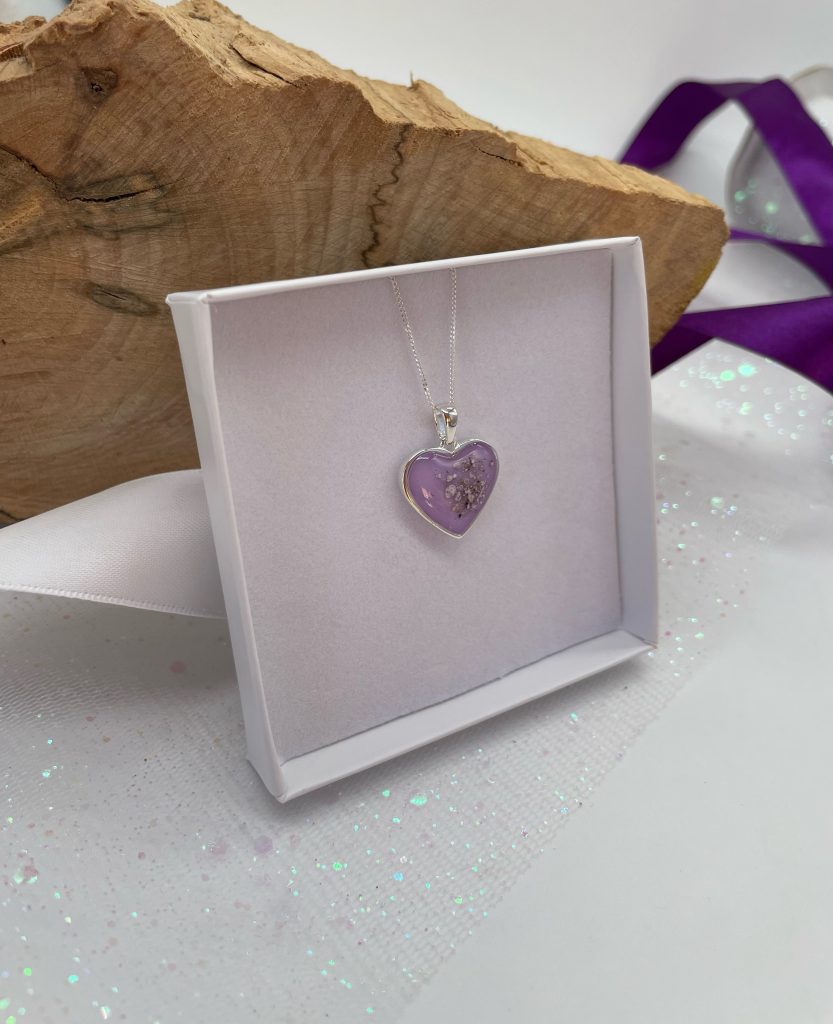
We’d like to feature the work of one of our clients here, Victoria, who is the owner of Sparkle 8 Studio, in the beautiful county of Shropshire. Victoria makes beautiful ashes jewellery alongside other gifts. Please do have a look at her work…

…and a Happy Valentine’s Day to everyone.

Calligraphers Are Writing Something Worth Reading

When it comes to birthday cards, or indeed cards for any occasion, what could be more heartening than to receive a handmade card with a personal message exquisitely penned in calligraphy? This surely beats a mass-produced alternative any day. Calligraphy combines two or even three art forms, depending on our definitions and how it is generated. It blends fine art, linguistic art and craft. As such, it has huge potential to communicate a message which touches the reader on levels of both visual perception and verbal comprehension. At a time when words are all too often demoralising, accusative or just downright scary, what a wonderful gift to be able to present someone with an inspirational or encouraging text in the form of a card or framed quote.

Calligraphy is an ancient art form, finding origins in all corners of the world. The word calligraphy derives from two Greek words meaning beautiful and writing. However, forms of intricately crafted letter formation go back way further, to the Chinese and Phoenician empires. Phoenician scripts provided the roots of our Western calligraphy, altered down the ages by the Greeks and Romans. The wide variety of scripts which developed over the years makes a fascinating study, with the names given them no less worthy of note. Would you like to try your hand at Roman Imperial Capitals, Insular Majuscules, Caroline Minuscules or Lombardic Capitals?

Equally interesting is to trace the purpose of calligraphy through the centuries. In ancient China, it was expected that all educated men and some women would be able to produce a script using brush strokes to communicate through the written form. Skipping through to the Middle Ages in Europe, monks worked long hours by candlelight to copy large portions of the Christian Bible. The stunning Book of Kells and the Lindisfarne Gospels reveal not only the skills these religious communities had, but also the dedication and passion that the Scriptural texts they were copying inspired.

One might think that the invention of the printing press would have completely put an end to the need for calligraphy, but this was not the case. Certainly, the mass production of the written word ended the painstaking copying of Christian texts, but there were some manuscripts, for example, music scores and scientific papers, which still needed to be handwritten. It could be said that the invention of the printing press, rather than ending calligraphy, brought about a divide between handwriting for the main purpose of communication (for instance letter writing due to the rise in literacy) and written text produced for the sheer beauty of it.

However, as time went by the interest in calligraphy did drop, though it experienced a rise in popularity during the Arts and Crafts movement. It also broadened in its purpose during the Victorian age and into the twentieth century as many more children were being taught to write often in stylish copperplate (associated with English Roundhand) script.

We see today that calligraphy is yet again enjoying a comeback, with its potential to communicate messages which inspire, motivate and encourage. Here at Craft Insurance we are proud of the calligraphers we work with and enjoy watching their businesses grow.

So, if you have a love of and expertise in calligraphy, might you be able to catch the wave of its current popularity? From our observations, we would suggest you can. It can seem like a big leap to turn a hobby into a business, but if you start small and break down the hurdles, it is eminently possible. Start-up costs are low; as a keen calligrapher you probably already have a good assortment of pens, brushes and pencils. You then need paper or card, depending on what you are going to be selling. Possibly one of the gentlest ways to ease into selling your products is to produce a range of cards. You might decide to create a broad selection, covering birthdays, weddings, new babies etc, all with different styles and techniques. Or, you might like to develop a single, coordinated style and use this throughout your collection.

Another possibility you could consider is holding a workshop locally to teach some basic calligraphy. Many communities have an Arts Hub or Quarter, and it’s worth finding your way to one of them; you will meet like-minded people and be able to get on board with local art projects, often including workshops.

We mentioned earlier that it can be helpful to break down some of the tasks involved in starting a new business. One of these is often insurance, which can seem daunting initially. Would you need insurance and if so, what kind? As a family business ourselves we want to ensure you have the best value for money. Depending on what your plans are for the year, one way of doing this is to purchase one-day public liability insurance. One-day public liability insurance is easy to acquire and could be a good option if you are just starting out and only planning on attending one or two events this year. This could be a craft stall or a workshop. Public liability insurance is not a legal requirement but many event organisers ask for it. It covers you in the unlikely occurrence that a member of the public claims that they have been injured or had property damaged by one of your products. While this seems extremely unlikely at a calligraphy event, table legs can be stumbled over, anything could fall to the ground and cause a trip hazard or a glass picture frame could break. The whole purpose of one-day public liability insurance is to cover you for unforeseeable mishaps. We often call it our sleep-easy insurance. So drop us a line or pick up the phone and either Naomi or Sam will be here to answer your questions.

As we have seen, calligraphy is an ancient art form, with a rich and fascinating heritage. Maybe in our time, it will rise to the fore as an art form which can bring words to encourage, inspire and breathe life into people’s hearts and homes.

Enjoy Red Carpet Treatment with a Handmade Rug

A handmade rug is not just a piece of décor; it’s a work of art that can help to transform any plain room into a tranquil, stylish space. Not to mention the rich history of the intricate craftsmanship behind handmade rugs, which has made them a lasting example of luxury and style.

The history of rug making dates back centuries, and their origins can be traced back to ancient times, with evidence of rug weaving dating back to 2500 BC in the period of ancient Mesopotamia. Early rugs were not only functional floor coverings but they were also a way of expressing culture and status through artistic creations. 

The earliest rugs were handwoven using natural fibres that included wool, silk and cotton. Nomadic tribes that roamed Asia and the Middle East were amongst the first rug makers. It is thought that they crafted rugs that featured intricate geometric patterns and also included motifs that were inspired by their environmental surroundings.

One of the most well-known ancient rugs is the Persian rug which dates back to the 5th century BC and is celebrated for its timeless beauty. These rugs are renowned for their hand-knotting techniques as well as their vibrant colours and their typically detailed patterns. Persian rugs continue to be highly sought after today.

In the 15th century, European explorers brought back exotic rugs from their travels to the Orient and the Middle East. These rugs inspired European artisans to experiment with rug-making for themselves. The result was a design of a rug that was a blend of Eastern and Western design elements, colours and patterns.

Rug-making then made its way to the New World through European settlers. American Colonial rugs featured simple patterns and were woven with locally available materials such as wool and cotton. These rugs are still incredibly popular across the United States. 

The 18th and 19th centuries saw the Industrial Revolution revolutionise rug making (along with many other areas of our society). New machinery and techniques allowed for the mass production of rugs, making them more accessible to a broader audience and allowing them to be made in varying sizes and with a variety of different materials. 

While rug making was not originally a British tradition, in the 18th century, the demand amongst the upper class and the aristocracy for luxurious and stylish floor coverings led to the importation of fine Oriental and Persian rugs. These exotic rugs, with their intricate patterns and vibrant colours, became prized possessions in British homes. They graced the floors of grand estates and stately manors and can be seen today in many National Trust properties across the United Kingdom.

British artisans then began to emulate the styles of the rugs from the Orient and Persians, and this increased the production of British-made rugs throughout the 19th century. These rugs often featured a blend of traditional designs and new, stylish patterns reflecting the evolving fashions and tastes of the era. 

Handmade rugs have evolved significantly over the years, reflecting the changes in our tastes and styles, as well as the evolution of technology and equipment and our evolving and expanding cultures.

Traditional rug making involves hand-knotting individual strands of yarn or wool onto a foundation material. This then creates an intricate pattern and a rug that is durable over time. Although this is a time-consuming process, it is still used today. Contemporary handmade rugs often blend this traditional craftsmanship with modern design, colours and patterns. With growing environmental awareness, many rug makers also now use sustainable and eco-friendly materials. This includes organic wool and natural dyes that ensure the rugs that are created are not only beautiful but also environmentally responsible.

Some of the most popular types of rugs

Persian Rugs are renowned for their intricate pattern and rich colours. They are classics that add timeless elegance to any space that can be crafted into a variety of shapes and sizes.

Oriental Rugs are inspired by the artistic traditions and cultures of Asia and the Middle East. Oriental rugs often feature intricate designs and delicate craftsmanship.

Kilim Rugs are known for the flat-woven technique that is used to create them and they often have geometric patterns and vibrant colours which produce a rustic charm to the final product. 

Moroccan Rugs are characterised by their abstract designs and often plush textures. Moroccan rugs are a favourite choice for modern and bohemian interiors due to the bold designs that they include.

Tibetan Rugs are celebrated for their craftsmanship and feature intricate knotting techniques. They are also often inspired by Buddhist art and culture.

Why Own a Handmade Rug?

There are several reasons why you might want to own a handmade rug, not least of which is that every handmade rug is crafted with a great deal of care and attention to detail which ensures they last for generations to come.

Moreover, each handmade rug is a unique work of art, showcasing the skill and creativity of the crafter who created it, giving you a unique piece of craftsmanship to add warmth and comfort to any space and make it cosier and more inviting. This has become more of a focus in recent years with more people working from home. 

High-quality handmade rugs retain their value over time, and in some cases, they can even increase in value. This makes them a good investment for your home or office space. And, if you are fortunate enough to have one in your workspace, whatever you do, don’t forget to mention your handmade rug when securing insurance for your craft business! Insurance for craft businesses comes in many shapes and forms and can include content insurance for your office or crafting space. Here at Craft Insurance, we have been providing insurance for craft businesses for many years and we’d be delighted to help you find the professional insurance that meets your needs. Why not call us for a chat?

An Antidote for Blue Monday

Does anyone else out there find January a generally miserable month? If so, you’re not alone. The third Monday of this month was coined “Blue Monday” back in 2004 by a psychologist working in Cardiff. He came to this somewhat quirky conclusion by taking into account various factors including dismal weather, level of debt and guilt from broken New Year’s resolutions, sprinkled a little maths magic over them and hey presto, came up with this date. It was then usefully used to market summer holidays. So, there you have it; science has told us we could be miserable on the third Monday of January.

However, while it is true that many of us do feel gloomy in January, partly due to the aforementioned reasons, there are plenty of ways we can positively combat the January blues and even turn this wintery season into a time of recharging for our souls and hence reinvesting in our businesses. Here at Craft Insurance, we know you, our amazing crafters, have so much talent and potential for the year ahead, so we’re offering you a small antidote to get over the January hump. We’ll give a few practical tips to boost your general well-being, share some funny stories and quips to make you laugh, and end with some suggestions to set your business on a positive pathway for the year.

In an age where twenty-four-seven productivity is both possible and expected across the globe, it can be helpful to reflect for a moment that lifestyles were not always as monotone in their output as this. In pre-industrial Britain, the year had a gentle and unchanging rhythm which revolved around the comfortably predictable nature of the seasons. Thus, January was a fallow month, where work outdoors could only be carried out during short daylight hours and both the soil and the labourers were gifted with enforced rest. This must have helped prepare them for the long hours and physical toil during the rest of the year. Today we have the ability and need to continue working at a regular rate throughout the year, but maybe there is wisdom we can learn from our predecessors’ slow month of semi-dormancy.

Many of us have an urge to curl up, like a hibernating animal during those cold, dark days. Maybe we need to take note of our bodies. While we can’t rest during our busy days, maybe January could be a month of more bubble baths, more mugs of warm tea and less hurried weekends. Maybe it could be a time when we simplify where we have the agency to do so. At the same time, it could be a month when we lean into the beauty of the barren landscape; take slow walks and linger to observe the delicate outline of the leafless trees. Even our biggest cities have parks which hold hidden gems at this time of year. Look for signs of hope; spring bulbs poking their green pointed heads above the wet turf, bulging buds on the tips of branches and the softly returning light. As we invest in ourselves in these small ways we may well find we have more energy to run in the days ahead.

If none of the above chases away the January blues, how about some good old-fashioned humour? The oft-quoted adage that laughter is the best medicine does have some basis in that as we laugh our bodies release endorphins, the happy hormones, and a decrease in stress hormones. A good, deep belly laugh brings us together with friends and boosts our mood. A trawl through Pinterest gifts us with a wonderful array of craft-related jokes and we’ve collected some definitions to describe common crafter quirks that might give you a chuckle:

Procraftination – crafting instead of doing all the things that need to get done.

Stash building; the frequent buying of craft supplies with no idea of what will be made with them.

Working on my PhD – Projects half Done.

My problem isn’t that I buy too many craft supplies. My problem is that I shop faster than I create.

I’m a craftaholic on the road to recovery: just kidding…I’m on the road to the craft shop.

Let’s admit it, we write “made with love” on our creations because “made with cursing, two trips to the craft shop and lots of wine” just won’t fit on the cute little label.

The final recommendation in our toolbox to beat the January blues is to take a positive step towards growing your business this year. If you are teetering on the edge of turning your hobby into a business, there will be some questions you’re bound to ask. One might be “Do I need insurance for my crafting business?” The short answer is probably yes, you do need insurance for your crafting business! However, as there are several different types of insurance and you don’t want to waste money unnecessarily, why don’t you drop us a line or pick up the phone and we will do our best to answer your question. Insurance can seem daunting and as such it is something which you may procrastinate, or indeed “procraftinate” in sorting out. However, Naomi and Sam have lots of experience in answering a multitude of queries, especially, “Do I need insurance for my craft business?” and they will help you get this ticked off your “to-do” list, thus moving you one step further towards turning your hobby into a thriving craft business!

We trust you’re now feeling a little more hopeful and even excited about opportunities to come. We’ll finish with a crafter’s blessing:

“May you never run out of storage space, may your scissors never dull, may your trimmer blades be ever sharp, and your ink pads always full. May all your card stock have two sides and may their corners never be bent; and may your husband never know exactly how much you spent. Amen”

Crafty Resolutions To Make And Keep For The Year

Happy New Year to you all!

Here at Craft Insurance, we hope you enjoyed the Christmas season and we are excited to see your crafting businesses grow and flourish over this coming year. A new year can be a great time to make some resolutions which will benefit your craft business. However, New Year’s resolutions, although fired by enthusiasm initially, may not even last the month, never mind the year. So it might be more beneficial to focus on forming good habits, which will see you successfully through the year.

Forming a habit is essentially practicing a set behaviour which then becomes a routine part of your life. For example, cleaning your teeth, drinking a mug of tea in the morning, switching lights off when you leave a room. Some habits are not always good (screen-related ones perhaps) but developing healthy habits can be life-changing. Once a habit is formed, it becomes wired in our brains and we don’t have to think about it. The difficult part is forming these positive behaviours. That’s where a resolution or reason for forming the habit comes into play. If you are inspired to change a behaviour, your motivation will be greater, you’re more likely to form the habit and thus achieve related goals. So, as our New Year’s gift to you, we have ten categories of habits which will enable you to work towards some resolutions. Why not choose a few and get going on some positive and life-enriching habit formation? The first five are related to general well-being, and the second more specifically to business.

1. Most of us have indulged in sampling some delicious food over the Christmas season – and what a relief it was as all the calories started to become invisible! Many people start diets in January, but with the cold, dark days this is not necessarily a successful strategy. This being said, eating well will make you feel better and increase energy levels, which in turn benefits your business. What about choosing one area of your diet and introducing a small new habit? For example, increasing the amount of water you drink, swapping one caffeine drink out for a herbal one or cutting down on sugar in drinks.

2. Increasing exercise is another popular New Year’s resolution. This too will give you more energy to throw into your business so it’s an excellent investment of time. If this is a start up, why not aim for something small and achievable; maybe walking to the shops rather than getting in the car, or go for some accountability by arranging to play a sport or go to an exercise class once a week with a friend?

3. As well as taking time to focus on our bodies, the beginning of the year is an important time to focus on the wellbeing of our minds. Finding an interesting subject or an informative book and then committing to half an hour’s reading a week is a great way to developing some healthy mental habits. Of course, if you are an avid reader already, maybe add an extra half hour on.

4. Nurturing our souls is essential and will pay dividends when it comes to creative inspiration. In our fast-paced world it is often difficult to find the quiet space that we need. The busier you are the more likely that this space is only to be found in the morning or late at night before the rest of the household are up and about or after they have gone to sleep. I’m not promoting insomnia, but it could be worth setting the alarm fifteen minutes earlier and just sitting in the quiet; some people read poetry, some will find strength in a faith book like the Bible, and some will just enjoy the peace and awakening dawn.

5. While a habit that allows for solitude is good, so is getting together with friends. Balance is the key. Maybe you could seek out some local craft groups and commit to attending them on a regular basis.

6. Now onto the habits which relate directly to your business. Planning will save time and stress, so January could be a good time to book a table at some craft fairs. As you do this, one question you will need to ask is do I need public liability insurance for an event?

7. This leads us directly onto the next good administration habit. Make sure you have the correct insurance in place to avoid last minute panics. Back to our question “do I need public liability insurance for an event? It is not a legal requirement, but many organisers will ask that you have it in place. Public liability insurance will cover you if, when you are out and about, a member of the public claims you or your staff are responsible for causing an injury or damaging their property. Even if it is not your fault, you will be covered. To answer this question, do I need public liability insurance for an event? and other insurance related queries, get in touch with us; either Naomi or Sam will be here to help.

8. Admin could be a creative person’s least favourite part of running their business, but establishing some good habits and routines at the beginning of the year can save time and tension. Are there any regular slots you could allocate in your day/week for admin/packaging/social media etc? If this is something you find hard, you could try setting a time limit and rewarding yourself with something you like when you’re done.

9. On a related theme, it could be worth having a fresh look at your storage solutions, stationery and general work space. Sometimes have a refresh can help keep those good habits going.

10. Finally, resolve to give yourself some regular “me time” to breathe, to think and to be refreshed and inspired. This is not easy, especially if you have young children. It doesn’t have to be a big event, a simple walk in the fresh air taking time to appreciate your surroundings, maybe a coffee and a good book which feeds your soul, or maybe a wander around a busy market or car boot with lots of colour, noise and fun. We’re all unique and our creativity will be fired in different ways. Find what works for you and make it a regular date.

We wish you all a successful 2024!

Hooked on Crochet!

Brightly coloured granny squares, kitsch pot or toilet roll holders and seventies’ style dresses all evoke nostalgic memories and emotions, often of love or hate, around crotchet. Crochet did, in fact do a nose dive in popularity in the 1980’s and 90’s, but here at Craft Insurance we’ve been delighted to witness its rebirth with a new generation and see successful businesses grow out of this highly versatile craft.

In our second post where we delve into the resurgence of some traditional crafts, we will look back at the fascinating, relatively modern history of crochet and see how society has shaped it through the decades. We will also look to the future for those marketing their crocheted creations and showcase some inspirational small businesses.

Unlike some classic crafts, it is hard to trace the most distant origins of crochet and there are several schools of thought as to where its roots began. Some believe the first forms of crochet came from Arabia and spread via the trade routes to the Mediterranean. Others hold to its origins being with the indigenous peoples of South America, and still others to China.

In more recent history there are two threads from which modern day crochet has evolved; tambour embroidery and shepherds knitting. Tambour embroidery was introduced to the French aristocracy, probably from China, in the 1700’s. It is crafted by using thread on fabric, thus producing a flat design. Tambour comes from the French word meaning drum, referring to the drum like rhythmic beat of the hook tapping on the fabric. Shepherds knitting originates from the UK, probably from Scotland where crofters whiled away the hours while watching their sheep by “knitting” with a single hooked needle.

Meanwhile, across the Channel, a style of crochet was developed to fashion the delicate and intricate lace for which some regions are still known. In Italy lace making was predominantly carried out in monasteries, and referred to as “nun’s lace”. In France it was the upper classes who mainly availed themselves to the skill of lace making. During the revolution many of this segment of society were either killed or fled the country, thus rendering this expertise almost to extinction. Fortunately however, a small group of nuns in a tucked away monastery were determined these skills did not die out and quietly worked away making lace in the traditional method, thus ensuring the survival of a distinct and regional craft for subsequent generations.

While knitting was a firmly established technique at this time, crotchet had yet to catch on with the general population. It was another tragic event which seems to have catapulted crochet into this more general realm. During the great Potato Famine in Ireland, the starving Irish population had to look for ways to feed themselves. One of these was by learning to crochet lace which they could sell. This stunning Irish lace became well regarded and the art was spread to America as many Irish citizens emigrated to escape hunger. In England, Queen Victoria was so enamoured with a piece of Irish lace gifted to her that she learnt to crochet, thus establishing it’s approval for all.

Here in the U.K. crocheting grew from strength to strength. Intricate stitches were developed during the Edwardian era and it became part of the war effort on the Home Front in both World Wars. Whole articles of clothing were designed and made using crochet between the wars, and after the Second World War it played a role in the “make do and mend” culture of the nation’s austerity. The 50’s and 60’s were maybe the height of crochet popularity with the introduction of brightly coloured granny squares and a huge range of clothes, including wedding dresses, made by crochet.

Sadly the 1980’s saw the demise in the favour of crochet, but in the last decade or so it’s popularity has again gained traction with the burgeoning of online tutorials and websites, local crochet gatherings and a vast choice of patterns and yarns. We have also had the pleasure of seeing the rise in many small, successful crochet businesses.

If you are interested in the work of some modern day crochet influencers why not follow @repeatcrafterme, @allboutami, @tlyarncrafts, @bellacococrochet and @jimmybeanswool on INstagram?

If you enjoy crochet, why not consider selling some of your gorgeous creations? There is certainly a market for them, the start up costs are low and it is a craft you can easily fit in around other parts of your life; perfect for an initial toe dip into the world of craft business. These cold and often grey winter months are a good time to research what is out there, and begin to build a range of stock which is unique to you. It is also a good time to think about how you will sell your initial creations. Online is certainly an option, and there are a number of platforms through which you can do this. You could also look towards spring craft fairs and markets. This wonderful world is well worth exploring as it provides opportunities to network with other crafters, to meet customers and to gain inspiration from other stalls.

When you book, you will need to check if public liability insurance for events is required. While this is not a legal requirement, many organisers will ask that you have public liability insurance for events in place. Even if the event organiser does not request it, both that and product liability insurance are worth considering. Public liability insurance for events will cover you in the unforeseen event that a member of the public makes a claim against you for damage to themselves or their property; for example, breaking an ankle when tripping over a display unit. This is extremely unlikely and may not even be your fault, which is why we call it a “sleep easy” insurance. However, it is advisable to look into insurance backup and both Naomi and Sam are here to answer your questions to ensure you have the best package to set you on your way.

Finally, take a look at the inspiring crochet business listed below, have confidence in yourself and your creativity and get started!

The Return of Embroidery

Here at Craft Insurance we have seen an exciting resurgence in a wide variety of traditional crafts over the last decade. Over the next few months we will be running a set of blog posts to showcase these, explaining their history and development and pointing you in the direction of some inspiring crafters who have built successful business upon these skills. In today’s post we’re delighted to be looking at the ancient and intricate art of embroidery.

What comes to mind when you hear the word embroidery? Maybe it’s a small Victorian girl, head bowed low as she works industrially over a meticulously stitched sampler. It could be your team motif machine stitched on your sports kit, uniting your particular squad of players. Or perhaps it is a beautifully hand stitched design of a favourite holiday haunt, bringing back memories of coastal walks and cream teas whenever you glance its way. It probably is not of a man finding fulfilment in creating these complex pieces. However, while embroidery is mostly attributed to women and girls, it is not solely their domain. Both Henry Fonda, the dancer, and Gustav V King of Sweden, have admitted to their enjoyment of embroidery.

Embroidery can be described as the art of creating intricate and complex designs on fabric, using needle and thread. It comes from the French word, “broderie” meaning embellishment. It is commonly believed to have originated from China and the Near East, and to have spread as far as Europe by the Viking era. Samples have been found in Egyptian burial grounds dating from the fourteenth and fifteenth centuries. It became popular in Europe from 1000AD during the rise of the Christian Catholic Church and associated royalty where it was used to embellish robes, decorate table cloths and create wall hangings. Possibly the most famous of these is the Bayeaux Tapestry, depicting the battle of Hastings in 1066 where William of Normandy conquered King Harold, thus establishing French rule, culture and language in England. It is a truly spectacular hanging, with incredible detail and story telling ability.

If you have visited your local museum, the chances are there will be a few samplers, framed and hanging in a darkened room to prevent spoilage. These might be the most commonly known form of embroidery and those of us of a certain age may even remember having made a small cross stitch square sampler or smaller bookmark at school. The word sampler has Latin and French roots, meaning “an example”. This was exactly the purpose of the original samplers in Tudor England; in days before mass printing made pattern books a possibility, women used to record stitches and patterns on long pieces of fabric, to be used for reference at a later date. In the seventeenth century they became the mode whereby girls practiced stitching the alphabet; this was necessary to mark and embellish linen. In the eighteenth century working samplers almost became a right of passage for girls as they prepared for womanhood. Rather than being long pieces or linen rolled away for reference use only, they became pieces of artwork, to be displayed on the walls of their homes. Girls were not only stitching letters, but other motifs and designs. Religious depictions were popular as, interestingly, were maps. These became so sought after that printed, ready to stitch versions were made available. (An example of an early crafting business based on popular demand!). It was around this time that wool as well as linen was used as background material. As we reach the nineteenth century, working a cross stitch sampler became an exercise for girls in schoolrooms across the country. The coming of the Industrial Revolution, the beginnings of machine embroidery and the availability of cheaper cloth made this skill available to all; no longer was it just for the upper classes of society. The huge social upheaval that followed the First World War could have caused this rich tradition to slip into insignificance. However, a dedicated group of needlework schools and art guilds kept embroidery skills alive and now, almost another century later, we are thrilled to see modern crafting business thriving on the skills and heritage of embroidery.

So why is making hand embroidery such a popular basis for crafting businesses? In itself it is pleasurable and satisfying. Start up costs are low, it is easily transferable (ie it can be carried in a bag and picked up throughout the day), and there seems to be an increasing demand for it. Many tips for starting up are similar to those for any small crafting business, so have a root around our previous helpful blogs. Specifically though, you will need some basic supplies; fabric, embroidery silks, needles, embroidery hoops, marker pens and scissors. You will also need to find your niche, a product area which is unique to you. You will need to develop a marketing strategy and find some selling outlets, either in person or online.

It is also important to set good business foundations in place so you are then free to concentrate on the creative side of your business. Having the correct insurance is one of these. One question we are often asked is what is product liability insurance? There are several types of insurance it is advisable to have in place as you are starting out, and this is one of them. So, what is product liability insurance? It covers you for any completely unforeseeable occurrence in which a customer might claim that your product has caused harm, or not met expectations and make a claim against you. Even if it is not your fault, it will cover your legal defence costs and compensation. Give us a call or drop us a line and either Naomi or Sam will be able to answer not only what is product liability insurance? but also any other questions you have regarding the insurance building blocks of a new business. In the meantime, we look forward to hearing about how you are taking the rich heritage of embroidery and giving it a unique twist for your contemporary customers.

If you are interested in following some modern day embroidery influencers on Instagram why not follow the work of @brwnpaperbag_stitch, @mrxstitch, @jessicalongembroidery and @tessa_perlow?

We would also like to take this opportunity to wish all our readers a really Happy Christmas and a wonderful, prosperous New Year.

Event Liability Insurance for Woodturners

There can be few fragrances to beat that of freshly cut or turned wood; an aroma of freshness and the outdoors, evoking memories of childhood rambles through woodland, warm winter woollens and comforting hot chocolate in front of a roaring fire (if you were lucky enough to grow up with one in your home). The texture of wood too, is something to behold; literally to hold. Greenwood is rough and bumpy, a sensory adventure for our fingertips. Turned wood, in comparison, is smooth and soft, a tactile delight which can be quite mesmerising and calming as it slides across our fingers.

Woodturning is an ancient craft combining a mechanically rotating wood lathe with hand-held tools to produce exquisite objects shaped around the axis of rotation. While it has adapted to demand through the centuries, the original skills still required have been preserved and passed down from one generation to the next.

In pre-industrial Britain, wood turners used to congregate in local woods to set up their lathes and get to work. Working with simple mechanical pole lathes, powered by a pedal, they produced legs and stretcher rails for chairs, which were then passed on to another craftsman to be completed. They became known as bodgers. It could be that our modern term of doing a “bodge job” derives from these bodgers, indicating a job left incomplete.

The first record of a mechanical continuously turning lathe was found in one of Leodardo Da Vinci’s sketches; there is, however, no evidence that this was his own design, but it shows that the concept was circulating around that time (pardon the pun). The next biggest change in wood turning came, unsurprisingly, with the Industrial Revolution. From working with pedal powered lathes in the woods, wood turners had to adapt to using high output machines in factories to cope with the demands of a fast industrialising Britain. They supplied the textile factories of the North, churned out farm implements and articles for the nation’s increasing maritime fleets as well as sports equipment, musical instruments and everyday domestic items. This increase in the scale of manufacture started the trajectory towards larger companies specialising in specific products which we see today.

However, even at this time, wood turning maintained it’s craftsmanship, with mechanically-minded gentry learning the skills and creating bespoke ornamental articles for their homes and gardens. Today, many items historically turned from wood are either no longer required, or are made from synthetic materials. Nonetheless, the age old skills have not been lost, and arguably have found a resurgence in today’s artisan wood turning community. The range of high quality products made from locally sourced wood is vast and includes domestic items such as stunning wooden bowls and platters showcasing the natural grain of the wood, pens, musical instruments, candlesticks, clocks and so much more. In our throwaway age which is ever more conscious of treading lightly on our beautiful earth, naturally turned wooden products carry a metaphorical sustainability badge too; they can be made from locally sourced wood, by local craftspeople and will have longevity as well as be completely unique.

There are many woodturning clubs across the country, where stories can be shared, skills honed and ideas sparked. These are great places to meet with other turners, and be immersed in the language, culture and creativity unique to this amazing community. If you are not a part of one, it is worth checking out your local area for a club. It is so encouraging to meet together with others who share your craft and passion; and on a larger scale, local clubs or groups can be the springboard for larger wood turning events. This may be a stall at a local craft show or a demonstration at a reenactment day, or a whole day or even week end event.

If you are a turner, how do you feel about travelling to attend such an event? It is an excellent way to showcase your craft, meet other like minded turners and generate some sales. So, what will you need to consider as you head off to such an event? If you are are holding a stall or demonstration at a pre-arranged event, a lot of the organisation will have been done for you, which is why it’s such a great option. If you are going to carry out some kind of demonstration there you will require extra planning as the venue will have to be suitable for the equipment you need. Whether you are just selling or demonstrating as well, you will need to consider event public liability insurance. However meticulous you are in your planning, it is impossible to predict those unexpected occurrences which could have serious ramifications for your business. Event public liability insurance is an insurance package tailored specifically to your business needs, and could include public and product liability insurance, employer’s liability insurance and legal expense cover. Although this may sound daunting, as a small family business who has been in the insurance world for several decades, we can guide you through quickly and easily to ensure you get a good value, bespoke package for the entire trip. With this in place, you can have peace of mind and be free to concentrate on all the other arrangements.

Publicity and advertising your stall’s presence is key; locally, if it is a small event, but go for national if you are attending a larger one. Advertising your presence at the stall on social media is a great way to get your message out there in many different ways. An event is a great opportunity for those interested in learning about wood turning to come and see a seasoned turner or two demonstrate their craft – it will be a real pull. Trade stalls, food stalls, live music and a bar are all part of the buzz and the excitement. If you are aiming more towards showcasing your craft to the general public, a demonstration will also be an attraction, as well as plenty of opportunity to sell your products. So, get in touch with us to find out about event public liability insurance. Now is the time to start planning for the New Year and browse through the exciting events that you could attend in 2024 to showcase your amazing skills and products as an artisan woodturner.

The Christmas Craft Gift List

Christmas is just around the corner; community carols sung around an outdoor tree, warm mugs of hot chocolate at the end of a winter’s walk, twinkling lights bedecking our homes and towns, building gingerbread houses with starry-eyed children, stirring up cakes and puddings with mouth-watering ingredients, a house filled with secret surprises and delicious fragrances….We hope you will enjoy some of these, but the reality is often very different from our ideals and the sugar-coated movies (but don’t we love them anyway?). Busyness often tends to be the overriding ingredient in this season, and it can be especially so for small craft business owners with Christmas orders to process and craft fairs and markets to attend. In the midst of this, we need to squeeze in our family preparations, including buying and wrapping gifts. We hope that in amongst it all, you will be asked what you would like for Christmas. There are lots of gift lists for crafters online, but here at Craft Insurance, we want to offer you some slightly different suggestions. We know that the essence of Christmas is not found in mass commercialism; we are conscious too of using the resources of our beautiful planet well and not buying unnecessarily; we are aware that financial resources are tighter for most families and finally, we know that as sole craft traders, you work extremely hard and would like to think that you might receive some gifts this Christmas which will give you a much-earned lift throughout the year. So, here are our top ten gift suggestions for crafters; environmentally responsible, economically savvy, locally produced where possible and bringing delight for more than just a day. We hope you might find something which you would enjoy and gain ideas for your crafting friends.

1. Always useful are tools and materials for your business, be this soft and colourful wool, new hand tools for your wood-turning business, or a fresh supply of resin.

2. As your business grows, so too does your need for storage space; think about what might help your organisation and hence make everyday tasks easier. This might be storage carts, stacked boxes, a shelving unit, a beautiful new bag for wool or maybe a new stationery tidy for all the admin tasks.

3. If your craft involves a mess, maybe a card-making business or ceramic workshop, you will be wearing aprons daily, A new one will brighten your workspace and lift your spirits at the beginning of the day. See if this can be sourced locally.

4. Effective self-care is often more about the small, regular habits which speak to us that we matter and that our bodies, minds and souls are worth caring for and cultivating. So, what about some small treats, which will make your working day more comfortable? Maybe soft, warm woolly socks, a pair of cheerful fingerless gloves or a shawl to wrap around yourself during the cold days of winter? If possible, you could source these from another local crafter.

5. On the same theme, part of nurturing yourself is continuing to develop your mind and skills. Why not look out for a book which would encourage and inspire you to go further in your craft? There is much online, but it’s not the same as the rustle, texture and scent of turning fresh leaves in a new book, especially if it includes some exquisite, colourful pictures.

6. Here at Craft Insurers we believe in the value of a local community, and the benefit to our well-being of getting together with like-minded people regularly. One of the ways you could include this in your busy week is by meeting with fellow crafters either in the form of a club, where talks and demonstrations are given or in a more informal setting of a cafe for a crocheting or knitting circle. These will generally require a small donation or club membership fee, so you could ask for money towards this and enjoy connecting with fellow crafters on a regular basis throughout the year.

7. Another way to meet with fellow crafters and continue your professional development is by attending a national weekend event. These are excellent ways to join with others who share your particular passion, have the opportunity to talk shop and be inspired by experts in your particular skill and business. Maybe you could pick an event you’d like to attend and ask for contributions towards it. Don’t forget to book it and pop it on the calendar!

8. As a small business owner, the financial buck stops with you. Recognising the current financial squeeze, here is an ultimately shrewd, if not romantic, business suggestion. Why not ask for someone to buy your sole traders public liability insurance for the upcoming year? If you will be out and about selling, teaching or demonstrating your craft, sole traders public liability insurance is something well worth considering. While it is not a legal requirement, many organisers will require it, and it could save your business if the unforeseen happens and a customer decides to take legal action for damage, even if it is not your fault. Check out our website and contact us for more information. Naomi and Sam are here to help and although it might not be a traditional Christmas present, having sole traders public liability insurance will enable you to worry less and sleep more peacefully.

9. Here’s a fun suggestion but one which you could possibly source locally, or at least purchase from a fellow crafter: a “handmade by” stamp for your products. Another extra idea on the same theme is a door sign for your workspace. Something to bring a smile and sense of pride and purpose wherever you see it.

10. Our final suggestion is for a workshop experience for a craft which is not your own. Maybe you could go with a friend and have a fun day learning a new skill.

Whatever you receive for Christmas, we wish you a season of peace and refreshment and for a year ahead of firm foundations and flourishing growth for your business.